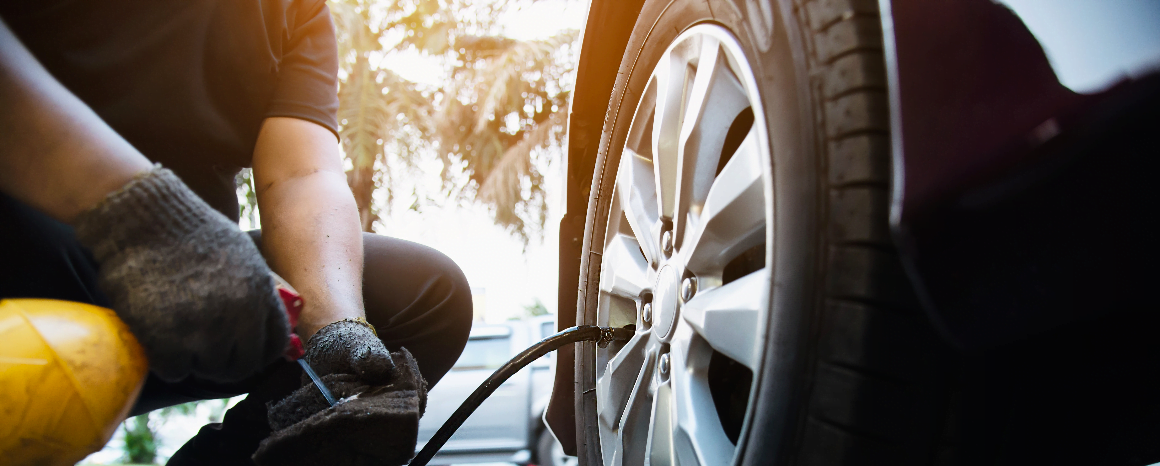
Car tyre pressure plays a crucial role in not only the safety but the overall drive of the car.
But haven’t you ever wondered what is the right tyre pressure for your car?
Well, we found different questions like this one and decided to come up with answers to all!
Following are some of the most searched questions about car tyre pressure and their answers.
1: What is the recommended Tyre Pressure for my car?
The recommended tyre pressure for a car is determined by the manufacturers after various trials and tests. But the optimum level of pressure is mostly 32-40 PSI (Pound Per Square Inch) when they are cold. So the best time to check the pressure is in the morning or after your car has been on rest for a long duration. A major concern of people is whether a 40 PSI is too high for tyres. Well, the answer to that is that it’s just right.
2: How to check the Tyre Pressure?
There are various places where you can get your car tyre pressure checked such as in auto parts stores, mechanics, and gas stations. But what if we told you that you could get tyre pressure checked at home? Wouldn’t that be amazing? For you to do that, you will need a Tyre Pressure Gauge (Digital or Regular), an air compressor, and a pen/paper or your phone. Here is the step-by-step process:
Step 1: Test with cold tyres
It is recommended to check the pressure when your tyres are cold. Hence check the tyre pressure after one night’s rest to avoid the heat from the previous drive’s friction and before the temperature rises.
Step 2: Check the tyre pressure with the gauge
Unfasten the valve and press the tyre gauge on the valve stem till a wheezing sound disappears. It will then give you the readings.
Step 3: Mark down the readings
Mark the readings down on your phone or on a piece of paper. Make sure that you note down the readings of each tyre and then compare them with the recommended PSI.
Step 4: Fill it up according to the recommended PSI
If you find that a tyre is underinflated then fill it up using the air compressor.
Step 5: Check the tyre pressure again
After filling the tyres, check the pressure again using your tyre pressure gauge to ensure that the psi is at the recommended level.
3: How to maintain proper tyre inflation?
Check tire pressures regularly. Once a week is best, but no less than once a month and always before any long road trip.
Follow the vehicle manufacturer’s recommended inflation pressures and not the pressure molded into the tire sidewall.
Check the pressures before driving when tires have been at rest and are not hot.
Remember, tyre maintenance is super essential for your vehicle to function properly.
4: How does tyre pressure affect driving?
Tyre pressure affects the grip, tyre wire, and the fuel economy of your car.
The grip of the tyre is linked with the size of the contact patch between the tyre and the road. An overinflated tyre decreases the contact patch while an underinflated tyre increases it. Apart from that an over and under-inflated tyre affects the wear and tear of the tyre. Lower tyre pressure also results in a poor fuel economy. A lower pressure tyre leads to a higher contact patch resulting in a higher rolling resistance which in return causes poor fuel economy.
5: Any special conditions for tyre pressure Manipulation?
There are certain circumstances where you can manipulate your tyre pressure such as if you’re driving on sand, mud, etc. However, it is strongly advised that you check your car tyre pressure daily and keep them properly inflated.
All in all, keeping a check on your car tyre pressure is extremely important and should be done regularly for your safety and your vehicle’s longevity.
6: What is the normal tire pressure for a car?
The normal tire pressure for a car typically ranges between 30 to 35 pounds per square inch (psi), but it’s always best to consult your vehicle’s manual or the sticker on the driver’s side door jamb for the recommended tire pressure specific to your car.
7: How do car tire pressure sensors work?
Car tire pressure sensors, also known as TPMS (Tire Pressure Monitoring System), work by utilizing sensors located inside the tires or attached to the valve stems. These sensors measure the tire pressure and send the information to a control module in the car. The module then alerts the driver if the tire pressure drops below or exceeds the recommended range.
8: Is 40 psi a good tire pressure?
A tire pressure of 40 psi can be considered high for most standard passenger cars. It is crucial to adhere to the recommended tire pressure specified by the vehicle manufacturer to ensure optimal handling, tire wear, and safety.
9: Is 36 psi too high for tire pressure?
A tire pressure of 36 psi is within the normal range for many vehicles. However, it’s important to follow the recommended tire pressure provided by the manufacturer for your specific car. Deviating significantly from the recommended pressure can affect the vehicle’s handling, tire wear, and safety.
10: What happens if the tire pressure is too high?
If the tire pressure is high, several things can occur. The tire’s contact patch with the road decreases, leading to reduced traction and compromised handling. The center of the tire may wear out faster than the edges, resulting in uneven tire wear. Overinflated tires can also be more prone to punctures or blowouts, especially when encountering road hazards.
11: What is the best tire pressure for highway driving?
The best tire pressure for highway driving is typically the recommended pressure specified by the vehicle manufacturer. This information can be found in the owner’s manual or on the sticker located on the driver’s side door jamb. Adhering to the recommended pressure helps maintain proper tire contact with the road, enhances handling, and ensures optimal fuel efficiency.
12: Does driving increase tire pressure?
Tire pressure can increase while driving due to several factors, including the heat generated by friction between the tire and the road surface. As the tires heat up, the air inside expands, causing the pressure to rise. However, the increase in tire pressure during normal driving is generally minimal and within an acceptable range.
13: Does tire pressure affect speed?
Tire pressure does not directly affect the speed of the vehicle. However, improper tire pressure, whether too high or too low, can impact the vehicle’s handling, braking distance, and fuel efficiency. Maintaining the correct tire pressure as recommended by the vehicle manufacturer helps optimize performance and safety.